Serving North East, North Yorkshire & West Yorkshire
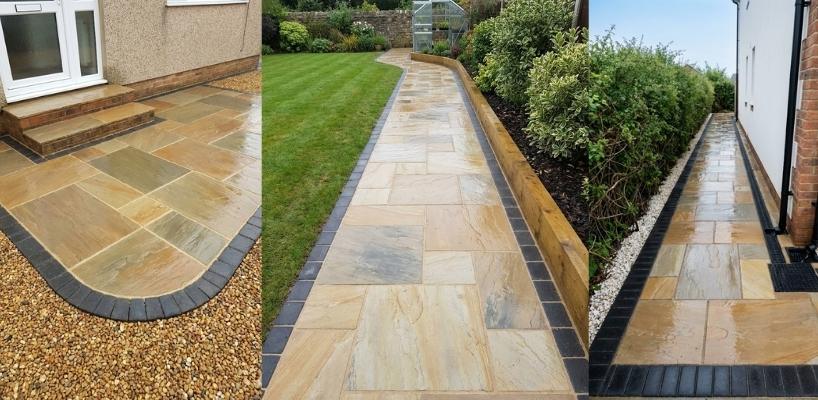
We install Indian sandstone paths across the North East & Yorkshire, creating durable pathways that combine natural beauty with exceptional longevity. Indian sandstone accounts for approximately 68% of natural stone path installations in Britain, and we've completed hundreds of projects demonstrating why this material remains the preferred choice for residential pathways.
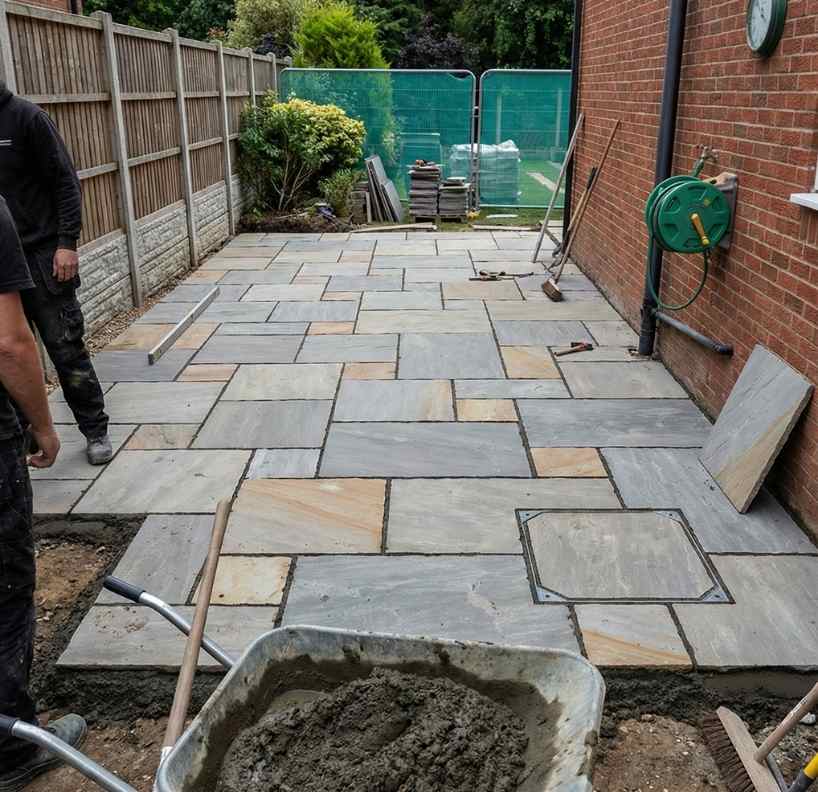
Our Indian sandstone pathways installation methodology follows systematic processes refined through years of experience. We begin with detailed site assessment, evaluating ground conditions, drainage patterns, and intended pathway usage.
Ground preparation forms the foundation of durable pathways. We excavate to 200-250mm depths, removing organic material and unstable subsoil. The excavation extends 100mm beyond finished path width to accommodate edge restraints. We compact the formation using vibrating plate compressors, achieving 95% maximum dry density to prevent settlement.
Sub-base installation uses Type 1 MOT limestone aggregate laid in 100-150mm depths. We install this in maximum 75mm layers, compacting each thoroughly. The graduated aggregate, with particles from dust to 40mm, locks together to create stable, free-draining foundations.
Bedding layers use semi-dry sharp sand and cement mortar at 4:1 ratio, laid to 30-50mm depth. Each section covers 3-4 square metres, ensuring completion before mortar sets.
Stone laying requires both precision and aesthetic judgment. Indian sandstone arrives with thickness variations of 18-35mm, so we sort material by thickness during installation. Each flag receives careful positioning and levelling using rubber mallets, spirit levels, and straight edges. Joint widths of 10-15mm maintain structural integrity whilst accommodating natural variation.
Edge restraints prevent lateral movement. We install concrete haunching along both edges, 100mm wide and extending to sub-base depth, a critical structural detail applied by our driveway company to ensure long-term stability. Pointing completes installation after 48 hours of bedding cure. We use traditional 3:1 cement mortars or polymeric jointing compounds offering enhanced flexibility and weed resistance. Joints finish 3-5mm below the stone surface to shed water effectively.
Indian sandstone pathway design balances aesthetic preferences with practical functionality.
Primary garden paths accommodating two-way traffic require minimum 1.2 metre widths, whilst secondary paths function adequately at 600-900mm.
Layout patterns significantly affect visual character:
Random opus patterns showcase irregular handcut stone character whilst minimising cutting requirements.
Coursed random patterns, where stones of similar width run in parallel courses, create more ordered appearances.
Regular patterns using four or more stone sizes suit formal settings but require extensive cutting.
We're committed to excellence in every project, delivering results that exceed expectations.
Two decades of expertise in transforming outdoor spaces across the UK.
Complete peace of mind with comprehensive public liability insurance.
We only use premium, long-lasting materials from trusted suppliers.
Skilled craftsmen dedicated to delivering exceptional results.
All our installations come with a comprehensive workmanship guarantee.
Hundreds of happy customers and 5-star reviews speak for themselves.
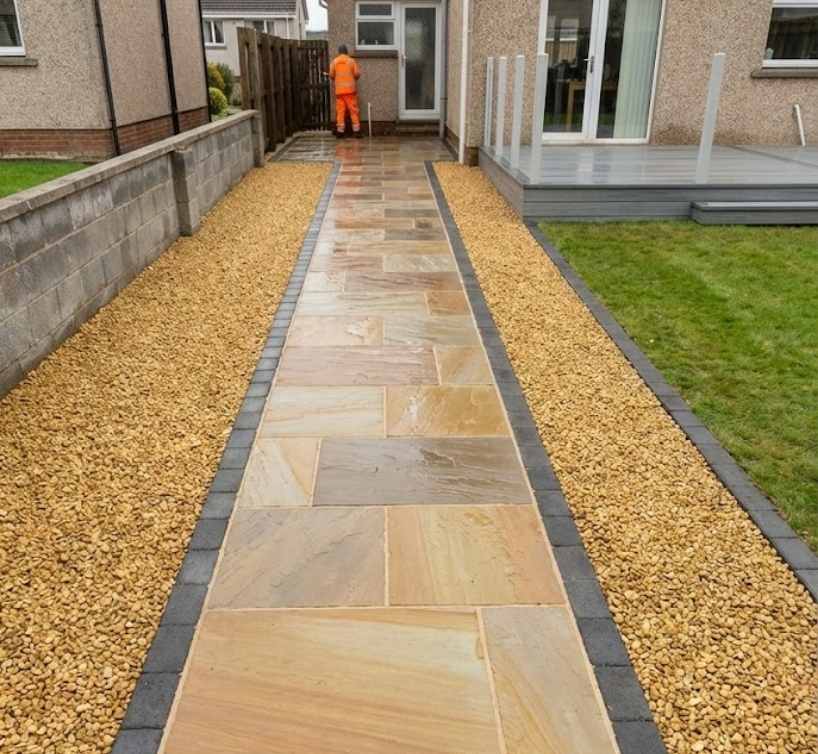
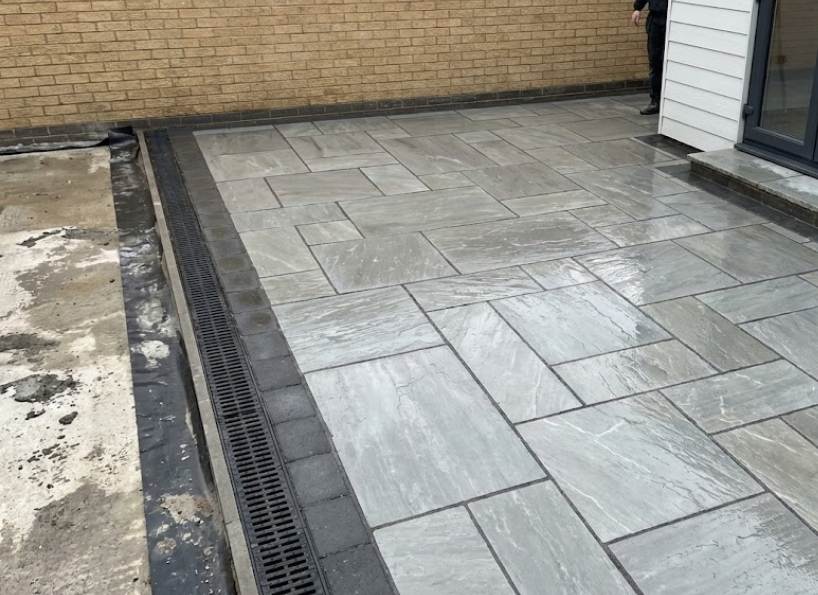
Colour selection influences integration with existing property materials. Buff and Raj Green complement warm brick and timber, whilst grey varieties harmonise with contemporary render and slate.
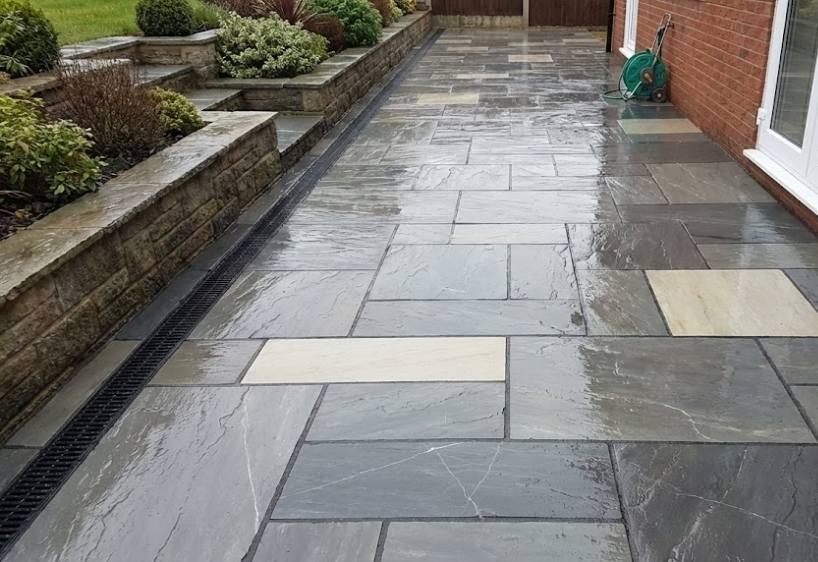
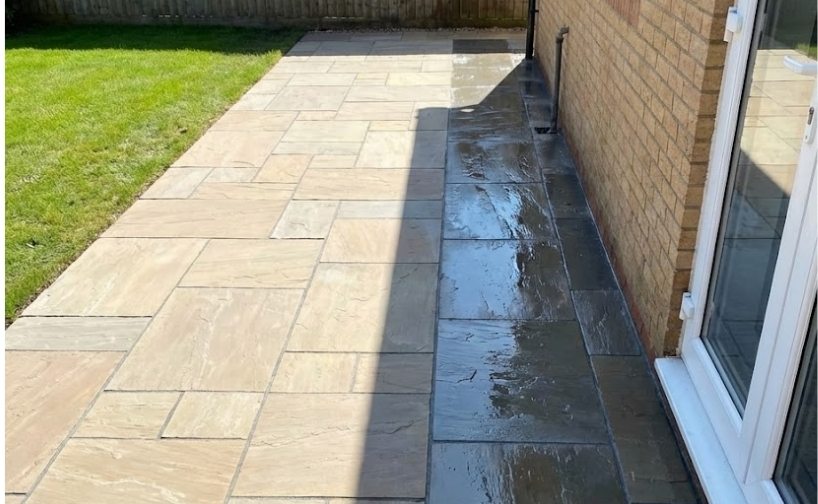
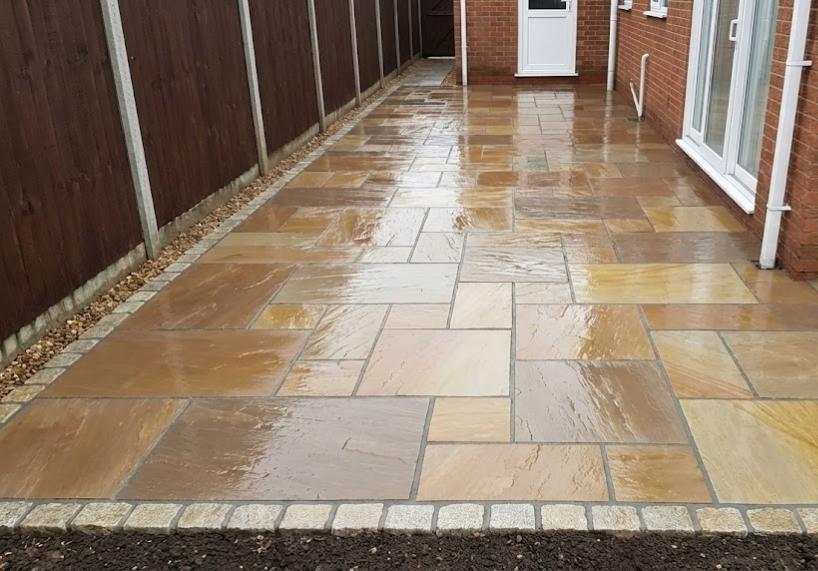
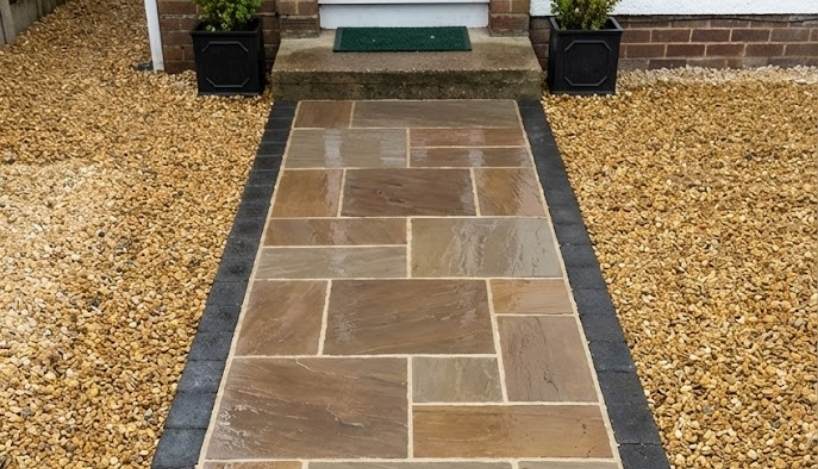
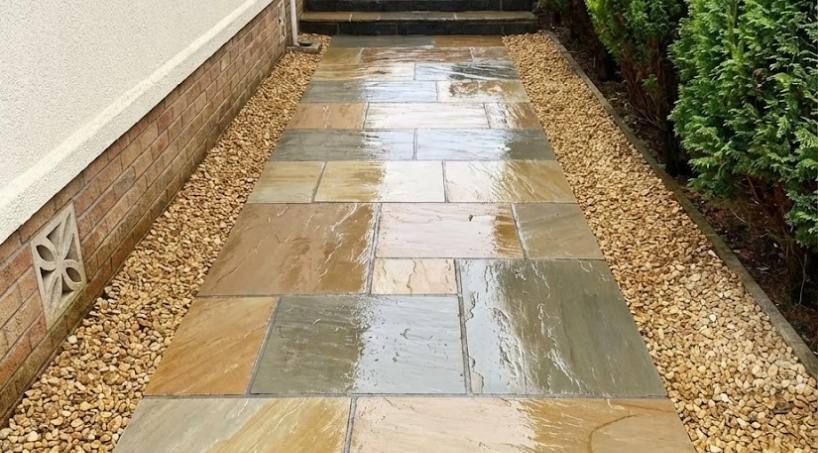
We recommend viewing samples on site at different times of day, as colours appear markedly different when wet versus dry.
Raj Green features predominantly green and brown tones with pink and purple highlights, quarried in Rajasthan. The substantial colour variation creates vibrant, multitonal surfaces.
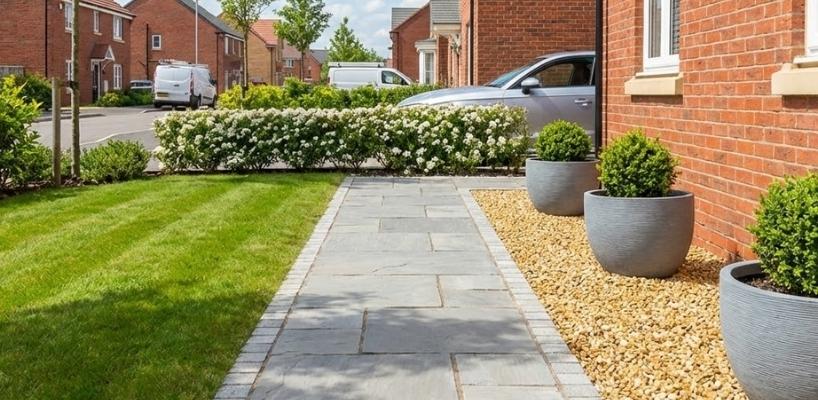
Kandla Grey shows predominantly grey tones from light silver to charcoal with subtle brown veining, increasingly popular for contemporary designs.
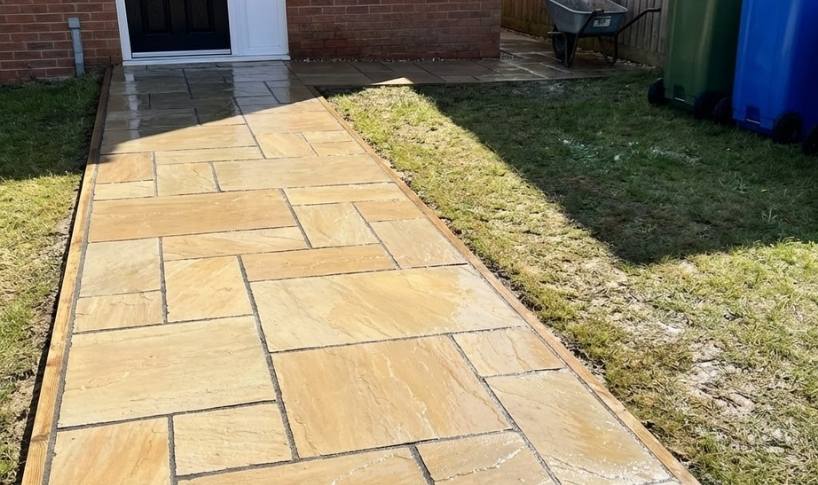
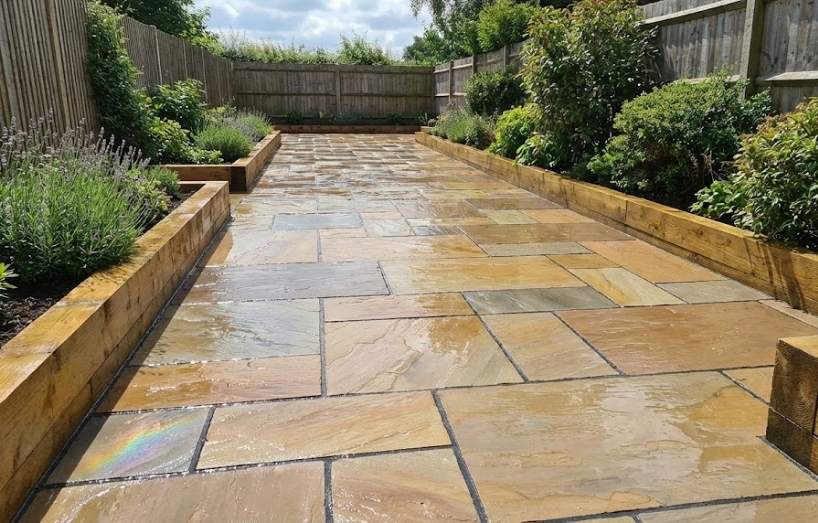
Buff sandstone produces warm golden-brown tones harmonising with traditional architecture, with less colour variation creating cohesive, understated surfaces.
Fossil Mint offers unique pale green-grey colouring with occasional fossil impressions, providing distinctive character for projects seeking unusual aesthetics.
Modak displays rose pink and plum tones, creating warm pathways that complement red brick and traditional garden settings.
Autumn Brown blends warm browns with russet and amber highlights, ideal for woodland gardens where paths should integrate with natural timber elements.
Rainbow sandstone incorporates the full colour spectrum, creating highly characterful pathways with maximum variation.
Indian sandstone paths require modest maintenance compared to alternatives.
Weekly sweeping during autumn and fortnightly at other times removes debris preventing weed germination.
Annual pressure washing removes algae and ingrained dirt, using settings below 1,500 psi to avoid surface damage.
Weed control through mechanical removal or careful glyphosate application prevents root penetration compromising structural integrity.
Polymeric jointing compounds substantially reduce weed establishment compared to traditional mortar.
Sealing enhances colour intensity and provides stain resistance but requires reapplication every 3-5 years at £8-15 per square metre. We recommend sealing only for high-value installations or specific stain risk areas.
The natural riven surface provides coefficient of friction values of 0.60-0.75 when wet, exceeding the 0.40 minimum for outdoor pedestrian surfaces.
Stone porosity of 2-4% allows breathing whilst resisting frost damage, critical given UK winters subject paving to over 50 freeze-thaw cycles annually in many regions.
Properly installed Indian sandstone paths maintain structural integrity after 30-40 years with only minor pointing repairs.
Surface wear develops gradually over 15-20 years of regular use, creating attractive patina enhancing rather than diminishing appeal. This substantially exceeds the 5-10 year timeframe for concrete paving wear.
Surface flaking indicates material defects rather than installation errors. Affected flags require removal and replacement, usually covered under material warranties initially.
Efflorescence appears as white deposits from soluble salts migrating from bedding mortars. This cosmetic issue typically resolves through weathering within 6-18 months. Specialist stone cleaners remove persistent deposits.
Joint deterioration requires prompt repointing to prevent progression to flag movement and structural instability. Early intervention through localised repointing costs considerably less than comprehensive pathway reconstruction.
Lippage, where adjacent flags sit at different heights, typically results from inadequate bedding preparation. Prevention through proper installation proves far more cost-effective than remedial corrections requiring pathway reconstruction.
Planning permission rarely applies to garden pathways under permitted development rights.
However, front garden paths exceeding 5 square metres using non-permeable materials require either permeable paving, permeable sub-base, or drainage to permeable areas.
Listed buildings and conservation areas may have additional restrictions.
Site access significantly influences costs. Properties requiring manual material transportation through houses or narrow side passages increase labour by 15-25% depending on distances involved.
Underground services including water mains, gas pipes, electrical cables require identification before excavation. We request utility company plans and use cable detection equipment, though complete identification cannot be guaranteed.
Material ordering ensures colour consistency. Indian sandstone shows natural batch variation, so ordering sufficient material from single batches proves essential for colour matching.
We order 10% excess for cutting waste, breakages, and future repairs.
Weather influences scheduling. Mortar work requires frost-free conditions during curing. Optimal installation runs April through October, though mild winters allow installation where conditions permit.
Carbon footprint considerations reflect substantial transportation distances. Shipping from Indian quarries generates approximately 0.15-0.25 tonnes CO2 per tonne of stone.
The exceptionally long lifespan amortises emissions over many decades, resulting in lower lifecycle carbon costs versus shorter-lived alternatives.
Traditional mortared installations create impermeable surfaces. We can install permeable jointing compounds and free-draining sub-bases allowing water infiltration whilst maintaining structural integrity, though these specifications increase costs by 20-30%.
We've installed Indian sandstone pathways, Indian sandstone patios, and Indian sandstone driveways across residential properties for over fifteen years, developing comprehensive expertise ensuring every project delivers lasting value.
Our systematic approach balances technical precision with design sensitivity, creating pathways enhancing both property functionality and garden character whilst providing the durability that makes Indian sandstone Britain's preferred choice for residential path installation.